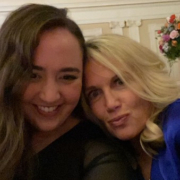
The Day She Called
Rachel called me on Saturday, May 13. With her living in LA and me living in St. Louis, our relationship was 90% texting. We texted every day, but it was rare for her to call.
“Mom, I don’t feel good.”
She’d worked an outdoor event the day before, so I told her to take a couple Tylenol and lie on a heating pad—the advice any mother would give. When she called again the next day, Mother’s Day, she sounded fine but tired, and she didn’t say anything was wrong.
But then she called me again the next day, Monday the 15th. She was in the ER at Cedars-Sinai because an urgent care nurse told her to go there instead. I threw a few things in a bag and flew out that night.
I got to her at midnight. They had her on an IV. She never even got a room; they sent her home with antibiotics after diagnosing her with mastitis, a bacterial rash. Out of caution, they did schedule her for a mammogram for the following Monday, but I flew back home thinking she was going to be ok—she just needed antibiotics.
Nine days after that first call, Rachel called again. It was Monday, May 22, the day of her mammogram. “Mommy…” (She always called me that.) “…I have breast cancer.” Again, I threw some things in a bag and flew back to LA on the same flight as the week before.
Everything after that was a domino effect. We went the next day for a biopsy. It usually takes longer to schedule one, but they were alarmed and acted fast. And even though biopsy result usually take a few days, hers came the next day: stage 4 triple negative inflammatory breast cancer. It was the trifecta of bad.
Because of Memorial Day, we couldn’t do anything but sit and wait for a few days. Finally, on Tuesday, May 30, nine days after her diagnosis, we met with an oncologist. She wanted Rachel to start chemo immediately.
I never felt hope. Rachel never felt hope. At first, we were in such shock that it was hard to comprehend what was happening. But we knew it was a kind of death sentence. Rachel would do chemo, not to cure but to extend her life. And no one thought our time together would be as short as it was.
Rachel’s cancer spread so fast. They didn’t even have time to implant a port before starting chemo—her first treatment went right into her veins. She only received two chemo treatments in LA before I brought her home.
It was a whirlwind. We were thrown into this serious issue with no time to plan or process what was happening. Between cancer, chemo, and pain meds, Rachel wasn’t feeling well. I got her out of her lease, packed her apartment, and got her set up with an oncologist at Siteman Cancer Center in St. Louis. Meanwhile, my husband, Phil, found her an apartment near us.
On June 13, one month after she called, I flew home to St. Louis with Rachel and her dog, Sasha. Getting her home, as hard as it was, was necessary, and she could not have done it herself.
On June 19, Rachel met Dr. Ma, her oncologist at Siteman. She had chemo treatment every week for months. Each visit had a routine: sit in the waiting room, get blood drawn, sit in the waiting room some more, then get treatment.
And the whole time, every visit, the bell just stared at us. In the beginning, Rachel said she hoped she’d be able to ring the bell, but she stopped bringing it up because she knew she never would. We saw others ringing the bell, and that was hard for Rachel. Some people receive treatment and go into remission, but others are there just trying to get more time. At only 34 years old, the best that Rachel could hope for was just more time.
As hard as it was, Rachel was not going to give up. Even though she knew it wasn’t going to end well, with her ringing the bell, she was going to try everything. And everyone was amazing. Our family was amazing; her friends were amazing. Rachel felt nothing but love and support from the very beginning.
That August, Phil and I threw her a 35th birthday party on the rooftop of our condo. Friends and family flew in from around the world to celebrate with her. Rachel didn’t like talking about cancer. She didn’t want to broadcast it, and she didn’t wear pink. But Rachel made one Instagram post after her birthday to explain her situation and encourage others to take care of themselves: “This certainly wasn’t how I envisioned my 35th year of life, but I’m grateful for my life and never take one day for granted. If I can ask anything of my friends and family, it’s to take care of your health, go to the doctor regularly, and if you feel something, say something.”
A year later, by the end of August 2024, Rachel had been through six different formulas of chemo. She had a giant tumor on her chest and a pain pump with morphine, but it couldn’t relieve her pain. There was no hope for surgery, and she didn’t qualify for any trials. And the cancer was still growing and spreading. There was nothing left to try.
On September 23, Rachel’s besties flew in from New York, Chicago, and Austin to be with her one more time, to say goodbye. She was in so much pain, but she spent all day laughing and telling stories with her friends. When they left, she told me she was ready to go to Evelyn’s House, a dedicated hospice house, where she would receive 24/7 care and better pain management than we could do at home.
Rachel was only there for a week. She passed on Monday, September 30, 2024, only 506 days after she called to tell me she didn’t feel well.
Those 506 days happened so fast, yet they also seemed to take forever, like it happened in slow motion. Rachel had been living her best life in LA; she had just started a new job that she loved. And then, in just one moment, everything changed. She went from having a bright future to fighting for more time with us.
Even as well-educated women, we hesitate to burden others. We are trained to be stoic. But if something feels off or not right in your body, you have to get it checked out. Rachel often wondered if things would have been different if she’d gone in earlier. We can’t know if things would have been different for Rachel, but I’m still here, more than 1,000 days after the call that changed everything, to continue Rachel’s legacy and advocate for awareness.
I’ll never get another call from Rachel. I miss her voice, her laugh, her humor. While missing her, I spread her simple but important—and possibly lifesaving—request: “Take care of your health, go to the doctor regularly, and if you feel something, say something.”